How to Move Past Abandonment Fears and Build Lasting Relationships


Fear of abandonment can feel overwhelming, trapping you in a cycle of pain and insecurity. Nearly 10% of people in the U.S. struggle with phobias, including this fear, which often originates from childhood abandonment or abandonment in relationships. These experiences can leave you feeling unworthy of love, anxious, or even lead to self-sabotaging behaviors in relationships as a way to shield yourself from rejection. While these challenges are significant, healing abandonment issues is entirely possible. Through self-awareness and support, you can overcome these fears and create secure, lasting connections. You are deserving of love, trust, and relationships that bring joy and stability.
Key Takeaways
Fear of being left often starts in childhood. Knowing this can help you heal and improve relationships.
Knowing yourself is important. Writing down your thoughts can show what causes your fear.
Be kind to yourself. Try deep breathing and say kind words to feel better and more confident.
Set clear limits in relationships. Share your needs to build trust and respect.
Get help if needed. Therapy can teach ways to handle fears and build strong bonds.
Understanding Fear of Abandonment

What Is Fear of Abandonment?
Definition and common signs.
Fear of abandonment is a deep-seated anxiety that stems from the belief that people you care about will leave you. It often manifests as a persistent fear of rejection or isolation. This fear can lead to behaviors like clinging to others, avoiding emotional intimacy, or constantly seeking reassurance in relationships. You might feel hypersensitive to criticism or experience intense separation anxiety when loved ones are away. These signs can disrupt your ability to form healthy connections and leave you feeling emotionally drained.
Unlike general relationship insecurities, fear of abandonment is more pervasive. It doesn’t just arise during conflicts or misunderstandings. Instead, it lingers in the background, influencing how you approach relationships and how you perceive others’ actions. This fear can also coexist with conditions like anxiety or depression, amplifying its impact on your emotional well-being.
How it differs from general relationship insecurities.
While it’s normal to feel insecure in relationships occasionally, fear of abandonment goes beyond that. General insecurities might cause temporary doubts, but fear of abandonment creates a constant state of worry. You may find yourself overanalyzing every interaction, searching for signs that someone might leave. This fear often leads to codependency or superficial connections, as you try to protect yourself from the pain of being abandoned. Recognizing this difference is the first step toward healing from childhood abandonment issues.
Root Causes of Fear of Abandonment
Childhood abandonment and its impact on relationships.
Childhood abandonment issues often begin with experiences like neglect, abuse, or emotional distance from caregivers. These early experiences shape how you view yourself and others. If you felt unloved or unsupported as a child, you might carry those feelings into adulthood. This can lead to low self-esteem, trust issues, and a fear of being abandoned in relationships. Events like divorce, death, or inconsistent caregiving can also disrupt your sense of safety, making it harder to form secure attachments later in life.
Attachment styles and their role in abandonment fears.
Attachment styles play a significant role in shaping your fear of abandonment. An anxious attachment style develops when caregivers fail to meet your emotional needs consistently. This can make you crave closeness while fearing rejection. Avoidant attachment arises from emotionally distant caregivers, leading to difficulties with intimacy and a strong desire for independence. Disorganized attachment, often caused by neglect or trauma, combines both anxious and avoidant tendencies, creating confusion and fear in relationships. Understanding your attachment style can help you identify the root causes of fear of abandonment and begin the healing process.
Past relationship trauma and significant losses.
Traumatic experiences in past relationships can reinforce your fear of abandonment. Betrayal, infidelity, or sudden breakups can leave emotional scars, making it hard to trust others. Significant losses, like the death of a loved one, can also trigger a lasting fear of being left alone. These experiences may lead to self-sabotaging behaviors, such as pushing people away or clinging too tightly. Recognizing how these events have shaped your fears is essential for healing from childhood abandonment and building healthier relationships.
How Fear of Abandonment Affects Relationships
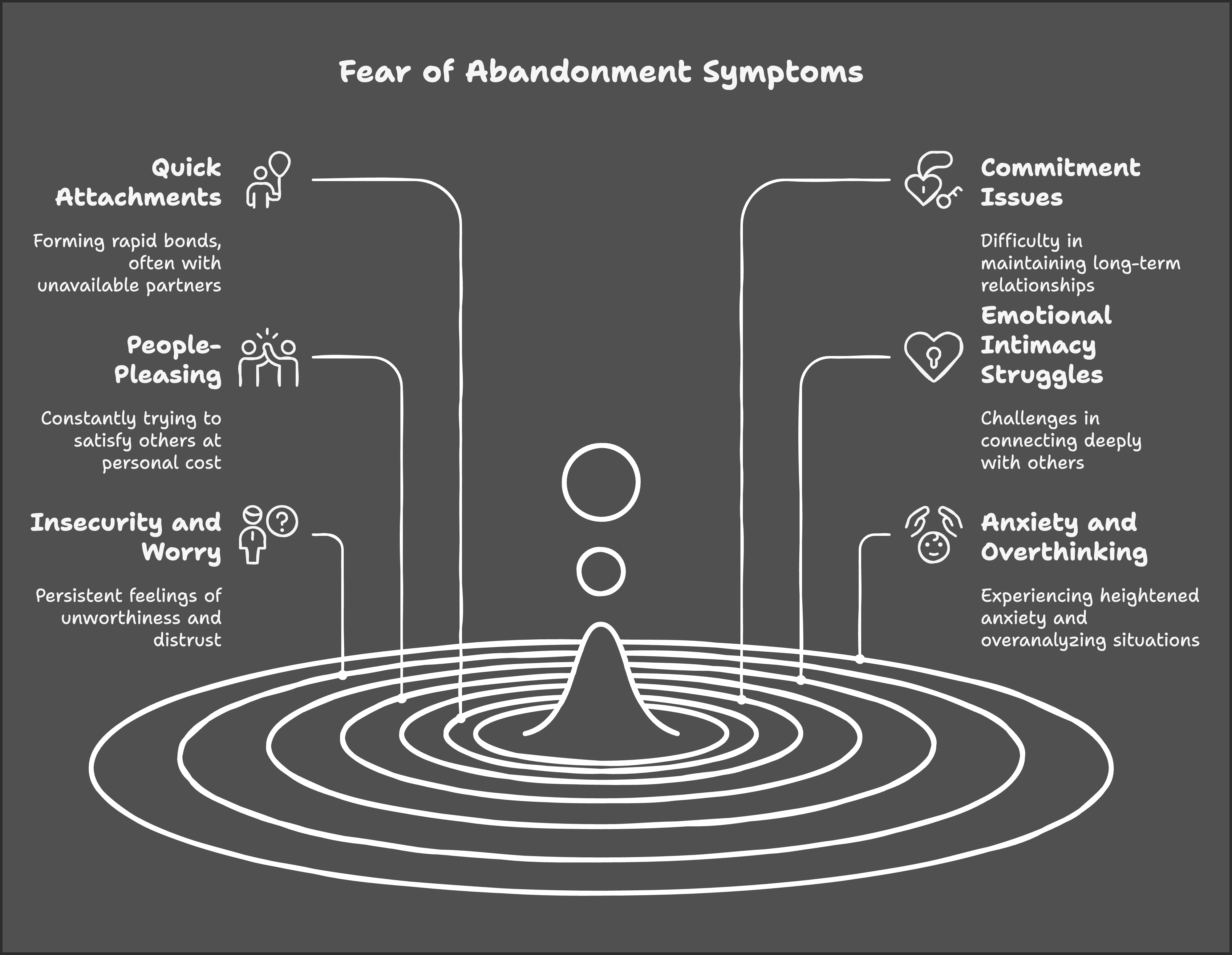
Behavioral Patterns
Self-sabotage and pushing partners away.
Fear of abandonment often leads to self-sabotaging behaviors that push others away, even when you deeply desire connection. You might avoid addressing conflicts or suppress your needs to keep the peace. This fear can cause you to act distant or overly critical, creating tension in your relationships. Sometimes, you may even end a relationship prematurely, believing it’s better to leave before being left. These actions, though unintentional, can reinforce feelings of isolation and insecurity.
Clinginess and over-dependence.
Clinginess is another common response to fear of abandonment. You might find yourself needing constant reassurance or validation from your partner. This over-dependence can strain the relationship, as it places immense pressure on the other person to meet your emotional needs. You may stay in unhealthy relationships out of fear of being alone, even when you know the connection isn’t serving you. This cycle can leave you feeling trapped and emotionally drained.
Difficulty trusting others and fear of vulnerability.
Trusting others can feel like an impossible task when you fear abandonment. You might struggle to open up or share your true feelings, fearing rejection or judgment. This fear of vulnerability can prevent you from forming deep, meaningful connections. Instead, you may keep your guard up, which can make your relationships feel distant or superficial. Over time, this lack of trust can create a barrier to emotional intimacy and mutual understanding.
Emotional Consequences
Anxiety, jealousy, and emotional instability.
The fear of abandonment often triggers intense emotional responses. You might experience constant anxiety, worrying that your partner will leave or stop loving you. Jealousy can arise, even in situations where there’s no real threat. These emotions can feel overwhelming, leading to mood swings and instability that affect your relationships. This emotional turmoil can make it hard to enjoy the present moment or feel secure in your connections.
Communication struggles and conflict avoidance.
Fear of abandonment can make communication challenging. You might avoid bringing up issues, fearing that conflict will drive your partner away. This avoidance can lead to unresolved problems and misunderstandings. Alternatively, you may misinterpret your partner’s actions, assuming the worst and reacting defensively. These patterns can create a cycle of mistrust and distance, making it harder to build a strong, healthy relationship.
The cycle of fear and its impact on relationship longevity.
When fear of abandonment goes unaddressed, it can create a self-fulfilling cycle. Your behaviors, such as clinginess or withdrawal, may push your partner away, reinforcing your fear. This cycle can make it difficult to maintain long-term relationships, as the fear undermines the trust and stability needed for lasting connections. Breaking this cycle requires self-awareness and a commitment to healing, but it’s entirely possible to create a future filled with secure, loving relationships.
How to Overcome Fear of Abandonment
Develop Self-Awareness
Journaling to identify triggers and patterns.
Journaling is a powerful tool to help you overcome fear of abandonment. By writing down your thoughts and emotions, you can uncover patterns in your behavior and identify triggers that heighten your fears. For example, you might notice that certain situations, like a partner being late or a friend canceling plans, cause anxiety. Reflecting on these moments allows you to understand why they affect you and how they connect to past experiences. This practice not only provides clarity but also empowers you to take control of your emotional responses.
Reflecting on past experiences and their influence on current fears.
Your fear of abandonment often stems from unresolved past experiences. Reflecting on these moments can help you make sense of your current fears. Think about how childhood neglect, emotional distance, or past relationship trauma shaped your beliefs about love and trust. By acknowledging these influences, you can begin healing from abandonment issues and challenge the negative thoughts that hold you back. This self-awareness is the first step toward breaking free from the cycle of fear.
Practice Self-Compassion
Techniques for self-soothing and emotional regulation.
Practicing self-compassion helps you manage the intense emotions tied to abandonment fears. Start by paying attention to your needs and feelings. When anxiety arises, use self-soothing techniques like deep breathing or mindfulness exercises to calm your mind. Taking breaks when overwhelmed and accepting your emotions without judgment can also help you regain balance. Treat yourself with the same kindness you would offer a close friend during difficult times.
Affirmations and reframing negative self-talk.
Positive affirmations are a simple yet effective way to overcome fear of abandonment. Repeating statements like “I am worthy of love” or “I am enough” can help rewire your brain to replace negative beliefs with empowering ones. Our minds learn through repetition, so practicing affirmations daily reinforces a positive self-image. Reframing negative self-talk, such as changing “I’m not lovable” to “I deserve healthy relationships,” builds confidence and fosters emotional healing.
Build Healthy Relationship Habits
Setting boundaries and communicating needs effectively.
Establishing boundaries is essential for building healthy relationships. Clear limits protect your self-worth and ensure your needs are met. When you communicate your boundaries, you create a foundation of mutual respect and understanding. For example, expressing your need for reassurance without becoming overly dependent helps you maintain balance in your relationships. This practice prevents self-abandonment and promotes healthier dynamics.
Fostering trust through consistent actions and honesty.
Trust is the cornerstone of any lasting relationship. To foster trust, focus on being honest and consistent in your actions. Show up for your loved ones and follow through on your commitments. Open communication reduces misunderstandings and creates a sense of safety. By becoming a reliable and supportive partner, you not only strengthen your relationships but also overcome abandonment issues rooted in mistrust.
Seek Professional Support
Benefits of therapy, such as CBT or EMDR
Therapy offers a safe space to explore and address the fears that hold you back in relationships. Techniques like Cognitive Behavioral Therapy (CBT) and Eye Movement Desensitization and Reprocessing (EMDR) are particularly effective for overcoming abandonment fears. CBT helps you identify and reframe negative beliefs, such as feeling unworthy of love or fearing rejection. By shifting these harmful thought patterns, you can build healthier perspectives about yourself and your relationships. EMDR, on the other hand, focuses on reprocessing traumatic memories linked to abandonment. This approach reduces the emotional intensity of past experiences, allowing you to move forward with greater confidence and emotional stability.
Other therapeutic approaches, such as Dialectical Behavior Therapy (DBT) and Psychodynamic Therapy, can also help. DBT emphasizes mindfulness and emotional regulation, which are essential for managing the anxiety and instability often tied to abandonment fears. Psychodynamic Therapy dives deeper into the emotions and thoughts driving your actions, helping you uncover and address defense mechanisms formed during earlier experiences. These therapies not only provide coping skills but also empower you to create meaningful, lasting connections.
Therapy Type | Description |
|---|---|
Eye Movement Desensitization (EMDR) | Effective for trauma, helps reprocess memories linked to abandonment trauma. |
Dialectical Behavior Therapy (DBT) | Focuses on mindfulness and emotional regulation, aids in managing emotions related to abandonment. |
Cognitive Behavioral Therapy (CBT) | Increases awareness of feelings, helps shift perceptions of abandonment-related events. |
Psychodynamic Therapy | Explores emotions and thoughts driving actions, reveals defense mechanisms formed due to abandonment. |
How support groups or relationship coaching can help
Support groups and relationship coaching provide additional avenues for healing and growth. Joining a support group connects you with others who share similar struggles. Hearing their stories can remind you that you’re not alone. These groups offer a sense of community and understanding, which can be incredibly comforting as you work through your fears. They also provide practical advice and strategies for navigating challenges in relationships.
Relationship coaching focuses on helping you develop skills to build and maintain healthy connections. A coach can guide you in setting boundaries, improving communication, and fostering trust. They can also help you identify patterns in your behavior that may stem from abandonment fears. With their support, you can learn to approach relationships with confidence and clarity. Whether through therapy, support groups, or coaching, seeking professional support equips you with the tools to overcome your fears and create the fulfilling relationships you deserve.
Tip: Don’t hesitate to seek professional support. It’s a powerful step toward healing and building the secure, loving relationships you’ve always wanted.
Building Secure Relationships After Overcoming Fear

Cultivating Emotional Resilience
Mindfulness practices to stay present and reduce anxiety.
Mindfulness can transform how you approach emotions and challenges in relationships. By staying present, you reduce anxiety and build resilience. Practices like meditation and deep breathing help you process emotions constructively. These techniques improve emotional regulation, allowing you to respond thoughtfully rather than impulsively. Over time, mindfulness fosters a sense of security within yourself, making it easier to navigate emotional intimacy. Studies show that consistent mindfulness practice significantly reduces anxiety, helping you feel more grounded in safe relationships.
To incorporate mindfulness into your daily life, start small. Dedicate five minutes each morning to focus on your breath. When anxious thoughts arise, gently redirect your attention to the present moment. This practice not only calms your mind but also strengthens your ability to handle relationship challenges with grace.
Building a strong sense of self-worth independent of relationships.
Your self-worth should never depend on others. Building a strong sense of self-worth empowers you to avoid self abandonment and maintain healthy relationship dynamics. Start by prioritizing your happiness. Engage in activities that bring you joy, like journaling, exercising, or spending time with supportive people. Positive affirmations, such as “I am enough,” can help you reframe negative beliefs and restore confidence. Self-care routines, like setting boundaries and practicing self-compassion, reinforce your value and create a foundation for secure attachment.
Forgiving yourself for past mistakes is another crucial step. Letting go of guilt allows you to move forward with clarity and strength. When you focus on your growth and fulfillment, you cultivate a sense of security that enhances both your personal well-being and your relationships.
Nurturing Secure Attachments
Recognizing and celebrating progress in relationships.
Acknowledging your growth is vital for nurturing secure attachments. Each step you take toward emotional intimacy and trust signifies progress. Understanding your attachment style helps you recognize patterns in your behavior and relationships. For example, if you’ve started communicating openly or setting boundaries, celebrate these milestones. They reflect your commitment to building safe relationships.
Progress doesn’t have to be monumental. Small victories, like expressing your needs or feeling more comfortable with vulnerability, deserve recognition. These moments show that you’re moving closer to forming secure attachments and creating a healthy relationship dynamic.
Continuing to prioritize open communication and mutual respect.
Open communication and mutual respect are the cornerstones of secure attachment. Active listening and empathy foster understanding, while honesty builds trust. When you express your feelings and needs clearly, you create a space for emotional intimacy. Consistent actions, like following through on promises, reinforce security in your relationships.
Mutual respect means valuing your partner’s boundaries and ensuring your own are respected. This balance prevents self abandonment and promotes a healthy relationship dynamic. By prioritizing these elements, you strengthen your connections and lay the groundwork for lasting, safe relationships.
Tip: Trust, emotional security, and effective communication are key elements of secure attachment. Focus on these to nurture fulfilling relationships.
Overcoming fear of abandonment is a journey that requires patience and consistent effort. Healing doesn’t happen overnight, but every small step you take brings you closer to the secure relationships you deserve. Start by enhancing your self-awareness. Reflect on your feelings and past experiences to understand how they shape your fears. Accept yourself fully, including your imperfections, to build self-esteem and foster emotional growth.
Remember, you don’t have to face this journey alone. Seek emotional support from trusted friends, family, or a therapist. Practice affirmations like “I am worthy of love and respect” to boost your confidence. Learn to communicate openly with others, expressing your needs and feelings without fear. These steps will help you create a foundation for lasting, fulfilling connections.
You have the power to heal and grow. By honoring your needs and embracing self-compassion, you can transform your relationships and your life. Take the first step today—secure, loving relationships are within your reach.
FAQ
What are the first steps to overcoming fear of abandonment?
Start by acknowledging your fear and its impact on your life. Reflect on past experiences that shaped these feelings. Journaling can help you identify triggers and patterns. Seek professional support, like therapy, to guide you through the healing process. Remember, progress begins with self-awareness.
How can I stop feeling clingy in relationships?
Focus on building your self-worth and independence. Engage in activities that bring you joy and fulfillment outside of your relationship. Practice self-soothing techniques to manage anxiety. Communicate your needs clearly without overwhelming your partner. Healthy boundaries create balance and strengthen your connection.
Can mindfulness really help with abandonment fears?
Yes! Mindfulness keeps you grounded in the present moment, reducing anxiety about the future. Practices like deep breathing and meditation help you process emotions constructively. Over time, mindfulness builds emotional resilience, making it easier to trust and connect with others.
How do I know if therapy is right for me?
Therapy is a great option if your fear of abandonment affects your relationships or emotional well-being. A therapist can help you explore the root causes of your fear and develop coping strategies. Techniques like CBT or EMDR are especially effective for addressing abandonment issues.
What if I still feel scared of being abandoned after trying these steps?
Healing takes time. Be patient with yourself and celebrate small victories. If fear persists, consider seeking additional support through therapy or support groups. Surround yourself with understanding people who uplift you. Every step forward, no matter how small, brings you closer to lasting change.